
Why “Livability” Changes the Heat Conversation
Notes from Phoenix, where researchers and city leaders are turning extreme heat into something we can measure, understand, and prevent.

Phoenix teaches you quickly: heat isn’t abstract. It’s something you negotiate with on sidewalks, at bus stops, on school playgrounds. A short walk becomes a calculation. A patch of shade becomes a kind of relief you can measure.
In 2024, Phoenix experienced a record 113 straight days with temperatures over 100 degrees Fahrenheit, including 70 days where temperatures topped 110°F. In this part of the country, heat can be a matter of life or death.
Beyond physical discomfort, Phoenix’s extreme heat also affects the city’s bottom line. Research shows worker productivity drops by as much as 2.5% per degree when temperatures rise above 80°F. With 100-degree days beginning in April, outdoor work, including construction, becomes more difficult and more dangerous.
A recent analysis by AECOM and The Nature Conservancy estimated that without mitigation or adaptation, annual labor productivity losses would reach $850 million annually in the Phoenix metro region. Heatwaves can also damage critical infrastructure and electrical transmission networks, costing an estimated $4 million annually to Phoenix road maintenance.
Heat is no longer a seasonal inconvenience. It is a persistent stress test of health, infrastructure, and daily life.
A city responding in real time
I began my visit at Phoenix City Hall with Mayor Kate Gallego, who has helped make heat response a defining priority for the city. In 2021, Phoenix became the first city in the country to establish a dedicated Office of Heat Response and Mitigation. Led by Dr. David Hondula, the office reflects a practical understanding of what extreme heat now demands: coordinated public health, infrastructure, planning, and communication.
These are not abstract strategies. They are practical interventions visible across the city.
Phoenix has piloted one of the nation’s largest cool pavement programs, applying reflective coatings to asphalt that reduce surface temperatures and slow heat retention overnight. That matters because the danger in extreme heat is not just the daytime high, but the lack of nighttime relief.
The city has also expanded urban shade, combining tree planting with built structures that function as both infrastructure and public art. In a desert environment where native trees do not always provide large canopies, this hybrid approach is essential.
And importantly, Phoenix voters have supported this work directly. In a recent bond initiative, investments in heat mitigation—from shade to building design—received broad, bipartisan backing. Residents understood something simple: these changes improve daily life.
From observation to understanding
The city’s response has been creative, but it’s also been informed by data from the outset. Some of the leading researchers on heat and human health are located just fifteen minutes from the Mayor’s office at Arizona State University.
As a physician who once logged dozens of hours in the research lab studying hearts and lungs, I wanted to see the science in action.
At Arizona State University’s Rob and Melani Walton Center for Planetary Health, I met researchers and city partners who are turning extreme heat into something public health can act on, not just endure.
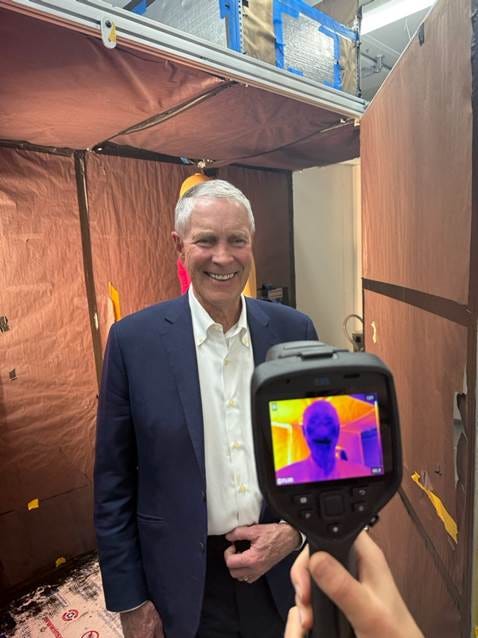
That’s why one word I heard in Phoenix stayed with me: livability. It’s more than climate, resilience, or mitigation. It’s the basic promise of public health: that ordinary life stays safe and possible even as conditions change around us. And it turns a polarized argument into simple questions:
Can you live and work here?
Can your child play outside?
Can your neighbor get home safely at the end of a shift?
One of the strongest voices on this came from Dr. Jennifer Vanos, an associate professor at ASU who directs the Human Biometeorology Lab. The lab studies how extreme heat affects human health in cities, especially for children and outdoor workers. Dr. Vanos put it plainly: if you use the wrong terms, “you can lose half your audience.”
I heard that same point reinforced by Dr. David Hondula, an ASU associate professor who serves as the City of Phoenix’s Director of Heat Response and Mitigation. He understands both the science and the on-the-ground realities of city governance, and he echoed why heat can be a bridge issue across political identity in a way that many climate terms cannot.
But livability, and the idea of thriving instead of just surviving, creates common ground because it speaks to what people value in everyday life: kids, work, mobility, and dignity.
At ASU’s Human Biometeorology Lab, the team demonstrated two tools that turn heat into decision-ready data.
ANDI, a sweating, breathing, walking thermal manikin, models human thermoregulation and quantifies heat strain without putting real people in unsafe conditions.
MaRTy, a mobile heat robot, measures how the built environment changes exposure—radiant heat from asphalt and buildings, airflow, and microclimate.
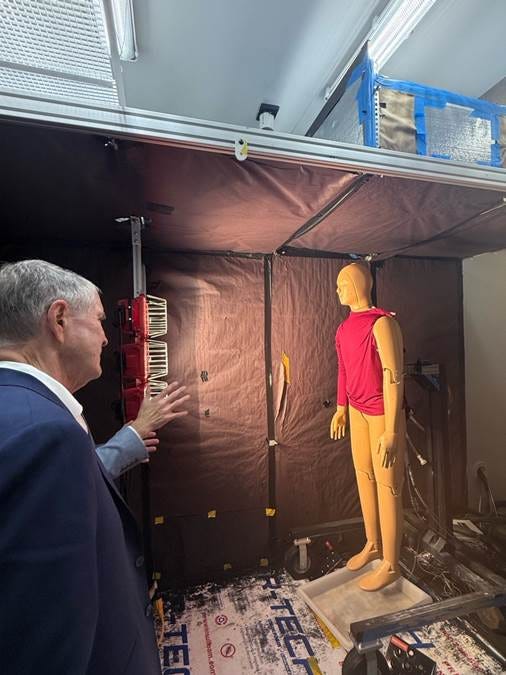
Together, they link the city’s heat exposure with what happens inside the body. That pairing is exactly what cities need: not just weather readings, but health-relevant intelligence that guides where shade, trees, cool materials, and operational changes will prevent harm.
Protection can be practical
Phoenix is already putting that insight to work.
Data from street-level heat measurements has helped guide where to prioritize shade structures, tree canopy, and cooling interventions, especially in neighborhoods with the highest exposure and vulnerability.
The city’s “Shade Phoenix” plan has already resulted in thousands of new trees and dozens of new shade structures, with a focus on walkability and public safety.
At the same time, researchers and city leaders are working together on HeatReady Schools, redesigning outdoor spaces and schedules so children can safely remain active even during extreme heat. In some schools, recess had been canceled for weeks at a time. The goal now is not avoidance, but adaptation.
There are also simple but scalable material solutions. Advances in cool roofs and reflective building materials are reaching a point where they can be implemented at little to no additional cost during normal replacement cycles, delivering long-term energy savings and measurable health benefits.
Even transportation connects back to heat. As Dr. Hondula noted, people are far more likely to walk, bike, or use transit if they can do so comfortably. In that sense, shade and cooling are not just adaptation strategies. They are enabling changes that reduce emissions over time.
Phoenix is also showing what it looks like to count heat correctly. Heat deaths are undercounted nationally; Maricopa County’s surveillance distinguishes “heat-caused” from “heat-contributed” and strengthens case review. It offers a model other jurisdictions can learn from.
And then there was a small, human moment that captured the whole point.
Dr. Konrad Rykaczewski walked us through his research on one of the least-understood parts of cooling: not how much we sweat, but how sweat evaporates on the skin. It sounds like a detail until you realize what it governs: how long someone can safely work a shift outdoors, which fabrics help the body cool, and when “toughing it out” becomes dangerous.
Then he reached for a hat he keeps in the lab: a Tennessine hat. His father, a nuclear physicist at Tennessee’s Oak Ridge National Laboratory, played a role in discovering element 117—Tennessine—and Konrad shared that family connection with me.
It was a reminder that science becomes protection when it’s connected to real lives—when discovery moves from the lab bench to the street corner.
The hat stayed with me for another reason. Discovery isn’t just a paper or a periodic-table entry; it’s a chain of curiosity and mentorship, passed from parent to child, teacher to student, lab to community. And those stories travel.
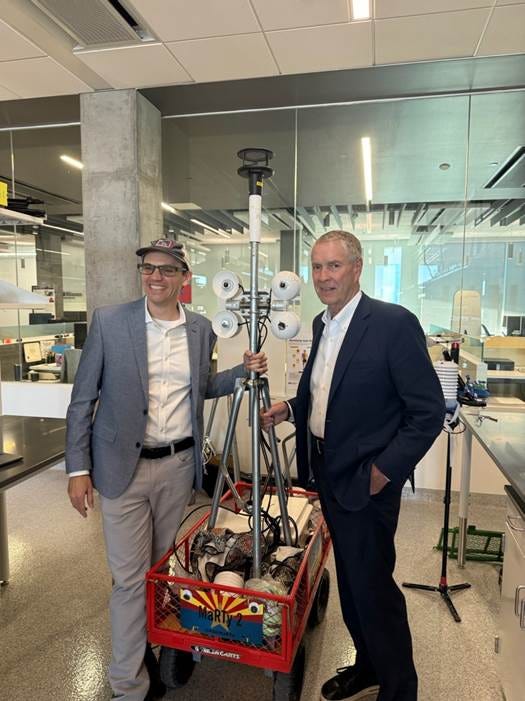
Tennessee to Phoenix. A father’s work, a son’s research, a city’s need. The distance between Nashville and Phoenix felt smaller. Not because the miles changed, but because the meaning did.
Discoveries are being made every day that will become the stories our children and grandchildren tell—about how we chose to protect one another, and what kind of communities we decided to build. If we want heat solutions that last, we need more than data. We need stories people can repeat—stories that make science feel like something we share, not something that happens “somewhere else.”
That’s where livability matters.
Livability is the goal.
Discovery and curiosity are how we get there.
Stories are the why.
With that shared goal, measurement shows us where the risk is highest, and design turns insight into protection. That protection can look very practical: cool roofs at replacement cycles, HeatReady Schools that keep kids safe and learning, and shade and trees that make streets walkable again.
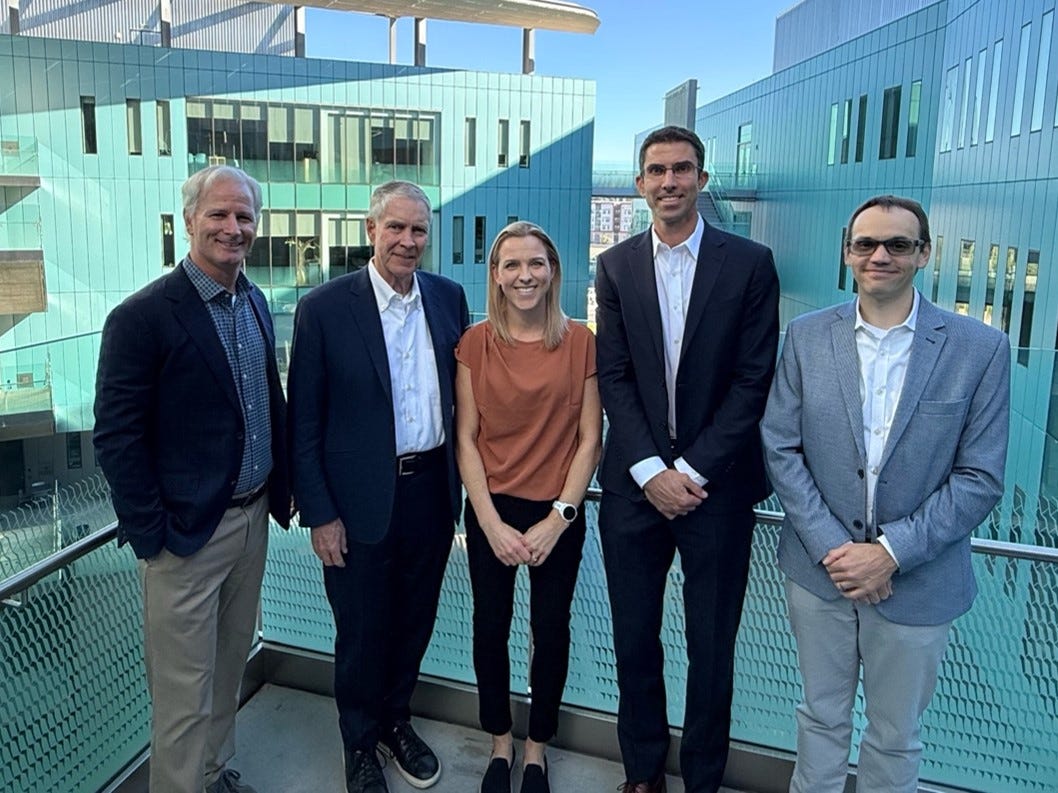
Heat is now a persistent stress test of health, infrastructure, and community. But I left Phoenix hopeful. When we measure heat honestly—and speak about it in the language of livability—we can move from endurance to protection, and toward a future our children can thrive in.
The US Green Building Council has been recommending architectural specifications including heat abatement. They are the ones with bronze, silver, and platinum grades of energy conservation. I received a basic competency certification from them.
One thing that I did not read here is adjusting living and working hours away from mid-day heat. Mid-day heat is when the body is stressed maximally. Something like a morning shift and an evening shift. My mother recalls when living in Baltimore MD before A/C predominated, that window blinds were closed mid-afternoon and people would rest on the floor. In other words, a siesta.