
The Overlooked Connection Between Infrastructure, Nature and Public Health

America tends to think about infrastructure, environmental policy, and public health as separate conversations. Roads belong to transportation. Forests belong to conservation. Hospitals belong to healthcare. But increasingly, the evidence suggests these systems are deeply connected — and that connection may become one of the defining public health challenges of the next decade.
Infrastructure decisions shape human health in ways we often overlook. Roads, culverts, flood systems, and wildlife corridors are not just engineering projects; they are public health interventions.
The idea sounds abstract until you examine the consequences.
Poorly designed roads can worsen flooding, increase contamination risks, disrupt ecosystems, and contribute to deadly accidents.
Reducing flooding on roadways
In Appalachia alone, repeated flood disasters over the last decade caused billions in damages and hundreds of deaths. Infrastructure that redirects water unnaturally or fragments habitats often increases long-term vulnerability for both people and wildlife.
Between 2013 and 2023, Central and Southern Appalachian states experienced roughly 20 federally declared flood disasters, causing nearly $1 billion in FEMA costs and at least 230 deaths. Because many flood fatalities occur when drivers attempt to cross moving water, road design plays a major role in public safety.
One effective solution is replacing undersized culverts and stream crossings so they can better handle floodwaters while also restoring natural stream flow and wildlife passage.
In East Tennessee, a partnership led by The Nature Conservancy, alongside the United States Forest Service and other partners, has been upgrading outdated crossings and removing barriers that worsen flooding. The effort is improving road resiliency while protecting habitat for more than 60 fish and mussel species, including endangered species like the smoky madtom and citico darter.
Most recently, the group removed the last remaining dam in Citico Creek within Cherokee National Forest, reconnecting more than 38 miles of stream habitat and replacing a flood-damaged road crossing that restored access to the surrounding wilderness area.
The partnership plans to replace up to seven additional high-risk crossings in the coming years, reconnecting roughly 75 miles of stream habitat while strengthening local roads against future flooding.
Reconnecting habitats and building safer crossings for wildlife
Another example is wildlife crossings.
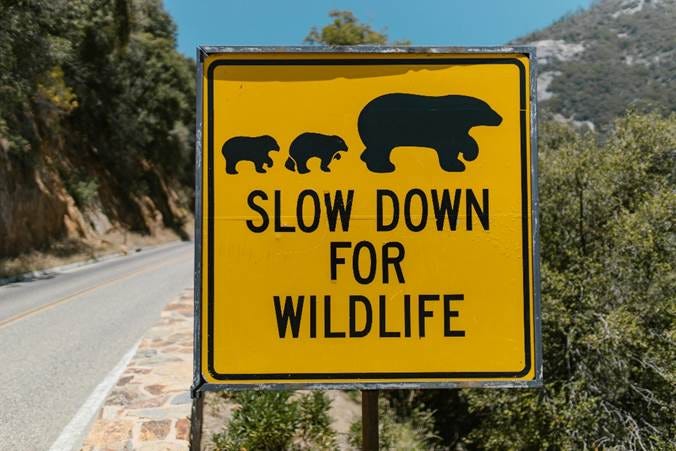
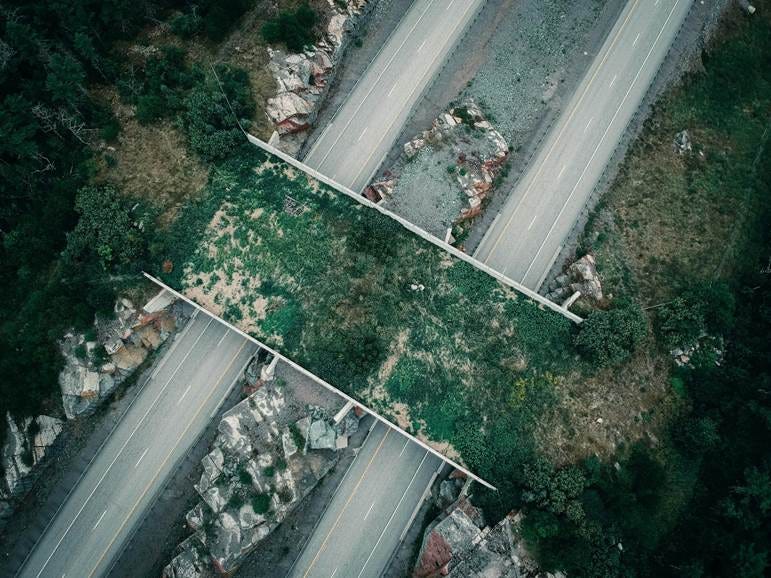
Each year in the U.S., vehicle collisions kill an estimated 1–2 million large mammals and roughly 200 people, costing more than $10 billion annually. Wildlife crossings — including bridges, culverts, and underpasses — can significantly reduce these accidents while helping animals safely migrate between habitats increasingly disrupted by floods, droughts, and wildfires.
One example is along Route 12 in Boonville, New York, where The Nature Conservancy and the New York State Department of Transportation retrofitted a 130-foot “critter shelf” into an existing culvert, creating a safe crossing for species ranging from bobcats to raccoons.
Despite proven benefits, wildlife-friendly infrastructure is often overlooked due to budget constraints, project timelines, and limited planning standards. To address this, The Nature Conservancy and its partners launched the Northeast Habitats and Highways video series, which promotes collaboration between transportation and conservation professionals to build roads that are safer, more resilient, and better connected to the natural environment.
Policy as a path forward
The environment is no longer a peripheral issue to healthcare outcomes; it is becoming a central driver of them. This is forcing a broader rethink of what healthcare investment actually means. Investments in resilient infrastructure and healthier ecosystems also function as good health policy. Framed as environmental or infrastructure projects, these initiatives can also reduce healthcare utilization and improve long-term population health.
Some governors and state leaders are beginning to recognize that land connectivity is essential for public safety, biodiversity and climate resilience. Congress can go further advancing legislation that strengthens habitat connectivity and restoration within transportation planning and development, and investing in resilience measures that prepare surface transportation systems for current and future weather extremes.
The larger shift is philosophical. For decades, healthcare has treated nature and the built environment as external variables. Increasingly, science suggests they are part of the healthcare system itself.
The future of public health may depend not only on what happens inside hospitals, but also on what happens outside them — in the roads we design, the air we breathe, the water we protect, and the ecosystems we choose to preserve.
___________________________________________________________________________________
Read more on this in my recent Forbes article here.
Author’s Note:
As a physician, I have spent much of my career studying human health. Increasingly, I have come to believe that understanding, and protecting, the health of the planet is inseparable from protecting our own.