
The Amazon: Why Our Journey Through The World’s Living Pharmacy Matters To You

By Bill Frist, MD | March 3, 2025
I’ve always been fascinated by the incredible ways nature and science work together to heal the human body. In my dad’s early medical-practice days back in the 1930s, he in fact had to rely primarily on nature to heal most of the maladies his patients presented with. He simply didn’t have the vast pharmaceutical armamentarium I had, coming along a generation later.
I thought about this as my wife, Tracy, and I began our guided hike deep in the Amazon rainforest (Tapajós National Forest) with colleagues from The Nature Conservancy (TNC). . . .
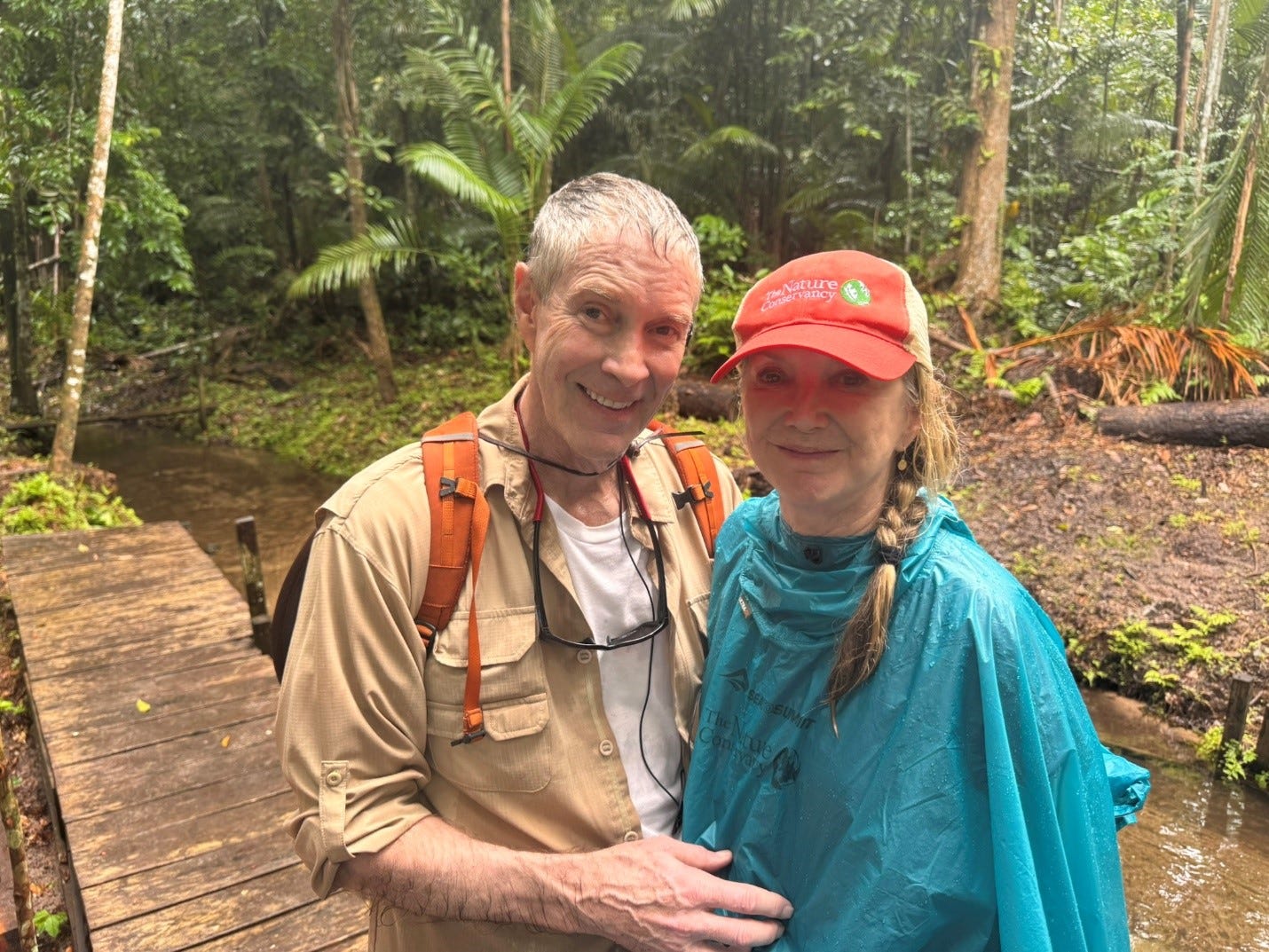
Our first stop was at an inconspicuous tree, the global impact of which I recognized at once as he began to tell the story. It was the Cinchona tree. Its bark, he explained, contains quinine—what became the first effective treatment for malaria. For centuries, indigenous peoples used it to combat fevers, and later, it became the foundation for modern antimalarial drugs. It literally revolutionized medicine globally and it continues to inspire modern malaria treatments. As a physician who has cared for many patients with this debilitating and deadly disease in Africa, I couldn’t help but marvel at how this one tree has saved millions upon millions of lives, most of them children, around the globe. . . .
A little farther down the trail, our guide stopped to show us a climbing vine he called Cat’s Claw. As we crowded around, he explained how this plant is routinely used to treat inflammation, such as painful wrists and ankles (arthritis), and how it strengthens the body (the immune system we know today) to prevent infection. Modern day researchers are exploring its potential to fight cancer. This vine growing quietly in the Amazon may one day help us tackle some of the most difficult diseases of our time. . . .
The Amazon is home to thousands of plants with medicinal properties, many of which we have yet to discover. We have just scratched the surface. . . . It’s why The Nature Conservancy has named the Amazon region as one its four most significant focal areas globally (another is Appalachia right here at home) to address the changing climate and biodiversity loss. The Amazon is not just a rainforest—it’s a lifeline, a source of healing for both the human body and the planet.
But this lifeline is under threat. . . . If we lose the Amazon, as we learned in our trek today, we lose more than the forest and nature-based solutions to the changing climate; we also lose potential cures we haven’t even identified yet. . . .
Let us work together to protect the Amazon, to honor its gifts, and to ensure that its wonders endure for generations to come.
Read the full article at Forbes at: https://www.forbes.com/sites/billfrist/2025/03/03/the-amazon-why-our-journey-through-the-worlds-living-pharmacy-matters-to-you/
____
Join us in making a difference! To learn how we’re partnering globally to protect, restore, and sustainably manage forests, click here: https://nature.ly/436tMdt
The famous doctor associated with fever pills was Dr. John S. Sappington (1776–1856), who developed quinine pills to treat malaria and other fevers. Although he was originally from Maryland and Tennessee, he became renowned after settling in Missouri. His “Dr. Sappington’s Anti-Fever Pills” were widely used in the South and along trade routes like the Santa Fe Trail. Sappington is recognized as one of the first U.S. physicians to effectively use quinine for malaria treatment and prevention.
He lived in Franklin, TN for a bit.
May This continue. Well done 👊